Thailand is a country packed with incredible experiences waiting to be discovered — idyllic islands, majestic temples, breathtaking marine parks, world-class cuisine, and vibrant city life. It’s the kind of place where unforgettable destination wedding memories are made for couples and their guests alike.
And while it may be a little further from the UK than some destinations, Thailand’s incredible scenery, hospitality, and value make it a popular choice for couples planning a wedding abroad.
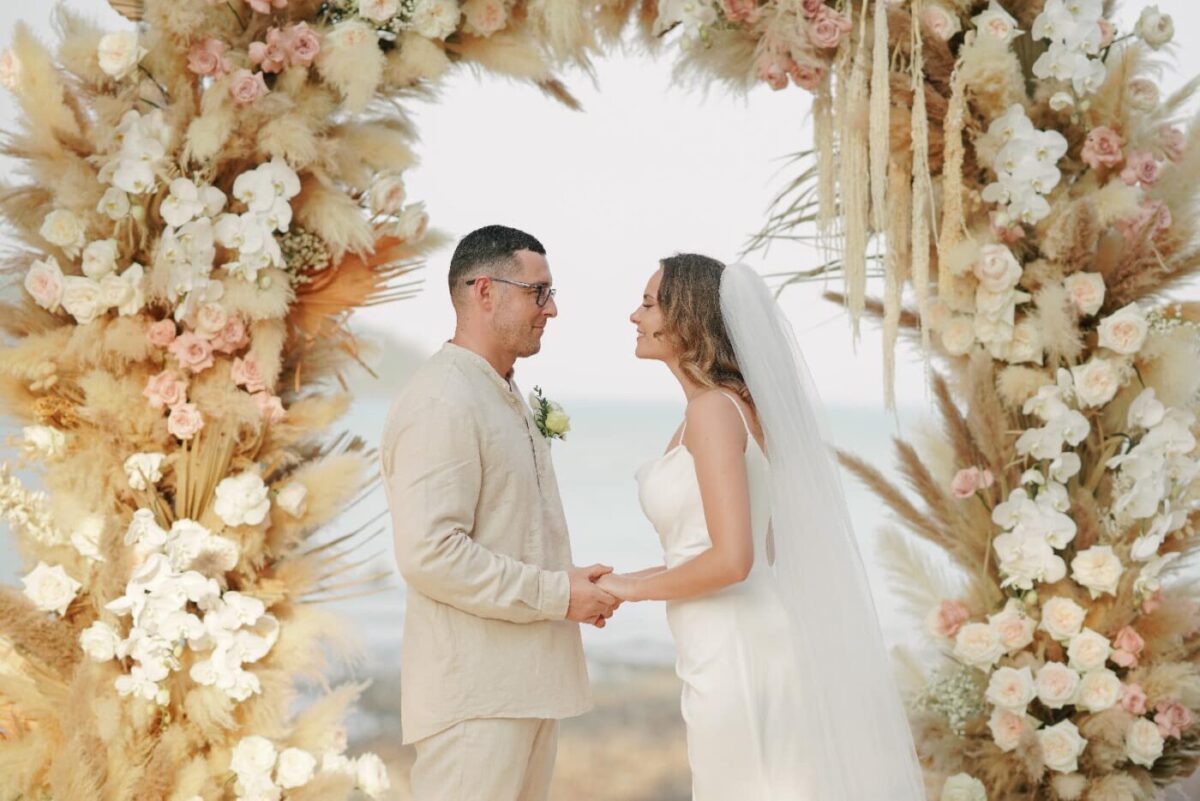
Venue: Island Escape by Burasari
Of course, if you’re planning your wedding here, you probably already know why Thailand is so special. When it comes to the logistics, however, things can feel a little confusing at first. Fortunately, you have two clear options when it comes to making your marriage official.
Option 1: Have your legal ceremony at home
Before heading to paradise, many couples choose to get legally married in the UK first.
Completing the legal ceremony at your local register office before travelling can make the process much simpler and less stressful.
Why do we often recommend this option? Because many couples say it makes their destination wedding far easier to enjoy. Once the paperwork is sorted at home, you can arrive in Thailand ready to focus on celebrating with your loved ones.
You can still have a beautiful ceremony in Thailand — the only difference is whether it’s legally binding or symbolic.
Many couples quietly complete the legal ceremony in the UK with just their two witnesses, then hold their full wedding celebration in Thailand surrounded by friends and family. For guests, it still feels like the real wedding day — just with the legal side already taken care of.
Option 2: Legally marry in Thailand with careful planning
If it’s important to you that everyone witnesses the official legal ceremony, then getting legally married in Thailand is certainly possible.
However, it does require extra time and careful planning. You’ll need to travel with key documents, have them translated into Thai, and spend some time visiting local consulates and government offices to complete the required paperwork.
For UK citizens, marriages performed overseas are generally recognised in the UK as long as they comply with the laws of the country where the marriage took place.
You can check the latest guidance on overseas marriages on the UK Government website.
How do foreigners get married in Thailand?
Here’s a step-by-step overview of how UK citizens can legally marry in Thailand.
Step 1: Check the current legal requirements
This article is intended as general guidance and should not be considered legal advice. Before travelling, you should always check the latest requirements through the UK government or the British Embassy in Thailand.
Legal requirements to marry in Thailand
-
Both parties must be at least 17 years old or meet the legal marriage age in their home country
-
Both partners must be mentally capable of consenting to marriage
-
Both partners must not be direct blood relatives or siblings
-
Neither partner can share the same adoptive parents
-
Neither partner can already be legally married
In Thailand, women whose previous marriage ended due to divorce or death must usually wait 310 days before remarrying, although exceptions can apply if:
-
A child has been born
-
You are remarrying your former spouse
-
A certified medical professional confirms you are not pregnant
-
A court grants permission to remarry
For the most up-to-date requirements, it’s best to consult the British Embassy in Bangkok.
Step 2: Gather your documents
To register your marriage in Thailand, you’ll need several original documents.
Passports
Before travelling, check that both partners’ passports are valid, ideally with at least six months remaining validity.
If one partner is travelling on a non-UK passport, they may need to contact their own country’s embassy for the equivalent documentation.
Certificate of No Impediment (CNI)
UK citizens must obtain a Certificate of No Impediment (CNI) to confirm they are legally free to marry.
Depending on the process at the time, this may be obtained through UK authorities or through the British Embassy in Thailand.
Both partners may also need to provide:
-
A valid passport
-
Birth certificate
-
Divorce decree absolute (if previously married)
-
Death certificate of a previous spouse (if widowed)
Step 3: Translate documents into Thai
Any documents not written in Thai must be officially translated by a certified translator.
The British Embassy in Thailand typically provides a list of recognised translators who can assist with this process.
Step 4: Authenticate your documents
Once translated, your documents must be legalised by the Thai Department of Consular Affairs.
There are several offices where this can be completed, including:
-
Bangkok
-
Chiang Mai
-
Phuket
Appointments may be required, so it’s best to organise this well before your wedding date.
Step 5: Register your marriage at the District Office
To complete the legal marriage, you’ll need to visit the Amphur (District Office) with your documentation.
Procedures can vary between districts, and some offices require appointments in advance.
Your wedding planner or celebrant can often assist with this step, and may also act as a translator or witness, as many officials speak Thai only.
Once your documents are accepted, your marriage certificate is often issued on the same day.
Some resorts can even arrange for a government official to attend your wedding ceremony and complete the legal registration there, meaning you may not need to visit the District Office separately.
Step 6: Celebrate your dream wedding
Once the legal paperwork is complete, it’s time to celebrate in one of the world’s most beautiful destinations.
Will you exchange vows during a sunset beach ceremony in Phuket, host a luxurious resort celebration in Koh Samui, or plan a vibrant wedding in Bangkok?
Thailand offers endless possibilities for couples dreaming of a truly memorable destination wedding.
Every couple’s journey to marriage is unique, and planning a destination wedding in Thailand is no exception. The key is to plan ahead, stay organised, and embrace the adventure as you begin this exciting new chapter together.
Planning a destination wedding?
Our Destination Weddings team can help you plan every step of your Thailand wedding — from venues and suppliers to travel arrangements and guest experiences.





 How do you get legally married in Spain for a destination wedding?
  What’s the best time of year for a Spain wedding?
  What part of Spain is best for a destination wedding?
  What’s the perfect location for your destination wedding in Fiji?