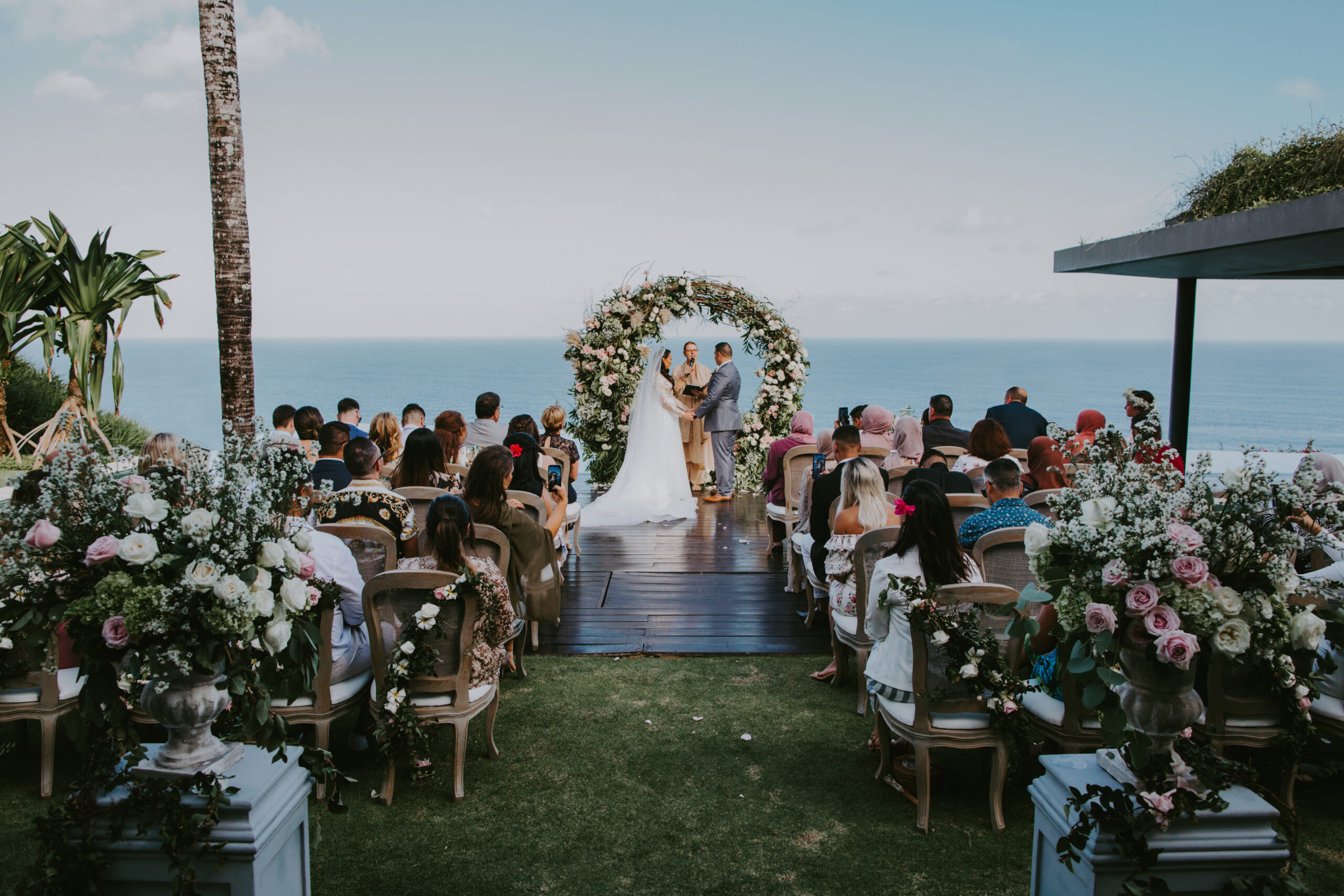
Bali is one of the world’s most popular destination wedding locations, and it’s easy to see why. With lush tropical rainforests, iconic rice terraces, and beautiful beachside venues, it offers an unforgettable setting for couples wanting to celebrate their wedding abroad.
For UK couples dreaming of tying the knot in Bali, the island offers a stunning location to gather friends and family for several days of celebration, sunshine, and relaxation.
Before you start packing your bags, however, it’s important to consider whether you want your wedding in Bali to be legally binding, or whether you’d prefer to complete the legal paperwork at home in the UK and have a symbolic ceremony overseas. Many destination wedding experts recommend handling the legalities in the UK first — but we’ll explain why so you can decide what works best for you.
Understanding Indonesian marriage requirements
Indonesia has very specific rules around marriage, and couples must comply with Indonesian law for the marriage to be legally recognised there.
The country places strong emphasis on religious marriage ceremonies, meaning weddings must be conducted under a recognised religion and performed by a religious officiant.
For UK couples marrying in Bali, this can make the process more complex, particularly because Indonesia also requires couples to share the same religion for the marriage to be legally recognised.
Legal requirements for marriage in Bali
If you want to legally marry in Bali, you’ll need to meet the following Indonesian requirements:
Same religion
Both partners must belong to the same religion recognised by Indonesian law. If you follow different religions, one partner may need to officially convert.
Recognised religions
Indonesia legally recognises the following religions for marriage ceremonies:
-
Islam
-
Hinduism
-
Buddhism
-
Protestant Christianity
-
Catholicism
Valid passports
Birth certificates
Certificate of No Impediment (CNI) – more on this below.
Why many couples marry legally in the UK first
Because of the religious requirements and paperwork involved, many UK couples choose to complete their legal marriage in the UK first.
This can be done simply at a local registry office, without a large celebration. Afterwards, couples travel to Bali for a symbolic wedding ceremony that includes all the traditions, emotions, and celebrations of a wedding day — just without the legal paperwork.
This approach helps couples avoid complicated bureaucracy and allows them to focus on enjoying their destination wedding experience.
Many couples even keep the legal ceremony private so their Bali wedding still feels like the main event for family and friends.
Getting legally married in Bali: what you’ll need
If you decide to legally marry in Bali, there are several steps you’ll need to complete both before travelling and while you’re in Indonesia.
Before leaving the UK
-
Confirm you meet Indonesia’s religion requirements
-
Gather all required documents, including:
-
Valid passports
-
Birth certificates
-
Divorce decree absolute (if previously married)
-
Death certificate of former spouse (if applicable)
-
-
Arrange a Certificate of No Impediment (CNI) through the UK authorities
-
Ensure your documents are translated into Bahasa Indonesia
In Bali
-
Attend your appointment for the CNI at the British Embassy in Jakarta or via the British Consulate service in Bali
-
Provide copies of all documentation to your wedding planner or officiant
-
Hold both:
-
A religious ceremony
-
A civil registration
-
-
Register the marriage with the Indonesian Civil Registry (Catatan Sipil)
-
Receive an official Indonesian Marriage Certificate (Akta Perkawinan)
Certificate of No Impediment (CNI)
A Certificate of No Impediment confirms that you’re legally free to marry.
UK citizens typically obtain this through their local register office in the UK, where they must give notice of marriage before travelling.
To obtain a CNI, you may need to provide:
-
Valid passports
-
Birth certificates
-
Decree absolute (if divorced)
-
Death certificate of previous spouse (if widowed)
-
Evidence of name changes (if applicable)
You should begin this process well in advance, as notice periods and documentation requirements can vary depending on where you live in the UK.
Notice of Intention to Marry
In Indonesia, couples must also submit a Notice of Intention to Marry with the local Civil Registry Office.
This must typically be lodged at least 10 days before the ceremony and acts as the formal declaration that you intend to marry in Bali.
Religious ceremony
All legally recognised marriages in Indonesia must be performed according to religious customs.
The ceremony may follow:
-
Hindu
-
Buddhist
-
Christian
-
Catholic
-
Muslim
Each religion has its own procedures and documentation requirements, so it’s important to check with your religious officiant or wedding planner ahead of time.
Remember: both partners must be registered under the same religion for the marriage to be recognised under Indonesian law.
Two witnesses
You’ll need two witnesses present at your ceremony.
They must bring valid passports to act as official identification.
Professional assistance
Many couples choose to work with a local wedding planner or celebrant in Bali to help manage the legal process.
Planners can assist with:
-
Document preparation
-
Translations
-
Appointments with the Civil Registry
-
Coordination with religious officiants
Some resorts also offer wedding coordination services that help streamline the process.
Timelines & deadlines to remember
Planning ahead is essential if you want your Bali wedding to be legally recognised.
Typical timelines include:
-
CNI appointment: arrange 1–2 months in advance
-
Document preparation: start at least 8 weeks before the wedding
-
Paperwork in Bali: allow 3–5 working days for appointments and processing
-
Marriage certificate translation: may take up to 1 week
Should you legally marry in Bali?
While it is possible for UK couples to legally marry in Bali, the process can be more complicated than marrying at home due to religious requirements and international paperwork.
Choosing to legally marry in the UK first can simplify the process and reduce stress during your destination wedding planning.
However, if having your legal ceremony in Bali is important to you, it’s absolutely achievable with careful planning and the help of a knowledgeable wedding planner.
Final thoughts
Ultimately, the decision comes down to what matters most to you as a couple.
If you want a straightforward process, completing the legal marriage in the UK and celebrating with a symbolic ceremony in Bali is often the easiest option.
But if your dream is to legally say “I do” in Bali, start early, understand the requirements, and work closely with experienced professionals to guide you through the process.
Either way, Bali offers an unforgettable backdrop for a destination wedding filled with romance, adventure, and celebration.
Planning your dream wedding abroad? Our expert Destination Weddings team are here to help.





 How do you get legally married in Spain for a destination wedding?
  What’s the best time of year for a Spain wedding?
  What part of Spain is best for a destination wedding?
  What’s the perfect location for your destination wedding in Fiji?